
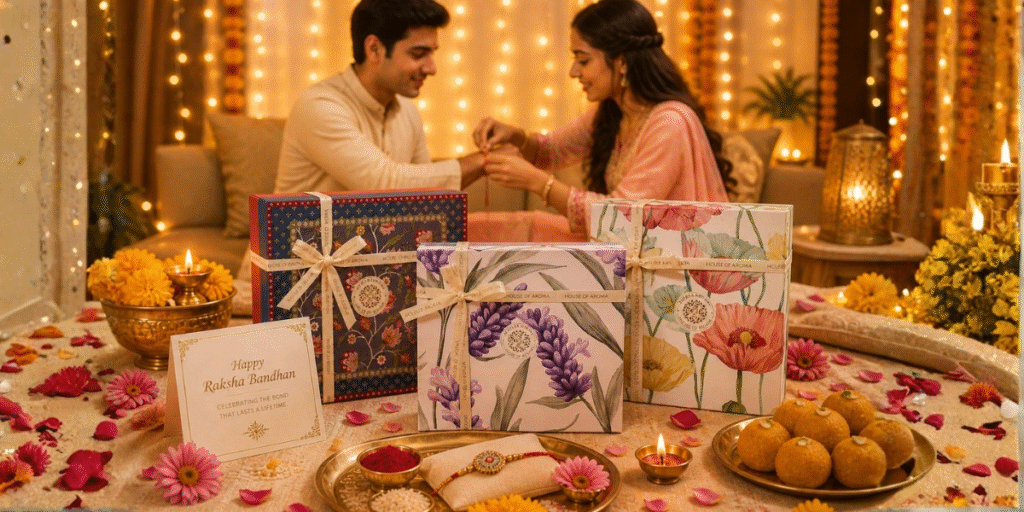
You know that feeling on Raksha Bandhan morning?
Before your eyes even open, you can smell it. Warm ghee hitting a hot pan in the kitchen, crushed cardamom floating through the hallway, and that faint, sweet scent of fresh jasmine sitting in a bowl of water on the dining table. Outside, the monsoon sky is usually doing that quiet gray thing, but inside, the house feels alive. Loud, a little chaotic, but soft around the edges.
That’s the thing about Raksha Bandhan. We spend so much time overthinking the rules, searching for the exact right muhurat, or worrying about buying the perfect gift. But when you strip all that away, it’s really just a day to pause, sit on the floor across from someone you love, and say: “I’m really glad you’re in my life, and I’m not going anywhere.”
Whether you’re in a packed family living room in Jaipur, a quiet apartment in Toronto, or sitting alone in a hostel room with a webcam open, here is what this day actually looks like when you let it just be human.
It Was Never Really Just About “Protection”
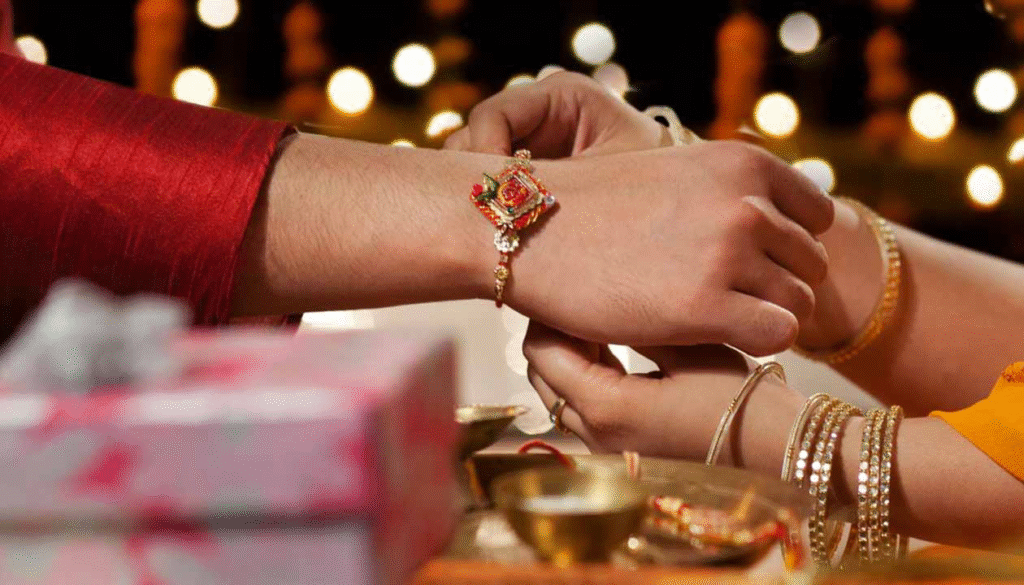
People love to say Raksha Bandhan is about a brother protecting his sister. But if you grew up with siblings, you know it’s so much deeper—and weirder—than that.
It’s about sanctuary. It’s about the person who knows your most embarrassing childhood stories, the one who covered for you when you broke a dish at ten years old, and the person who still takes your call at two in the morning when life gets heavy.
That’s why the way we celebrate it has changed so much lately, and honestly, it’s beautiful:
- Sisters tying threads for sisters because nobody else held them together through their toughest years.
- Best friends wrapping threads around each other’s wrists on a random Sunday because blood isn’t the only thing that makes family.
- People tying simple cotton threads around their favorite houseplants or old trees in the yard, taking a quiet moment to thank the earth for keeping them grounded.
There’s no strict script you have to follow. It’s just about acknowledging the people who make this world feel a little less lonely.
The Morning Ritual (Forget Perfection)
Don’t worry about whether your setup looks like something off Pinterest. The magic of the Raksha Bandhan morning is always in the small, messy details.
1. Building the Thali
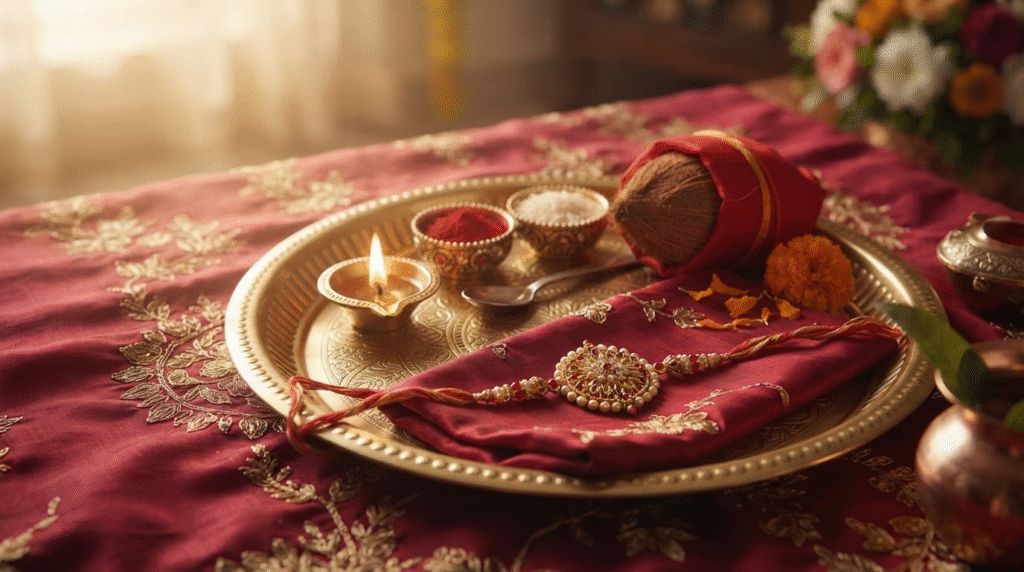
Grab whatever brass or silver plate your family pulls out for special days. Wipe it down, drop a few fresh rose or marigold petals onto it, and set out the basics:
- A tiny pinch of uncooked rice grains.
- A tiny bit of red roli and yellow haldi mixed with a drop of water.
- The thread—doesn’t matter if it’s fancy silk or just a piece of red cotton strand.
- A small brass diya with a bit of ghee and a cotton wick.
- A piece of sweet (even a bite of plain milk cake or chocolate works if you didn’t have time to cook).
2. Just Being Present
Sit down on the rug together.
- Press a dot of red paste onto their forehead with your thumb, and stick a few grains of rice onto it. It’s an old gesture, but it feels grounding—like a little blessing for their mind to stay calm.
- Tie the thread around their right wrist. Don’t worry if you don’t know any fancy Sanskrit prayers. Just lean in, tie the knot, and tell them what you actually wish for them this year.
- Light the lamp, wave the small flame in a gentle circle in front of them, and hand over a piece of sweet. Then eat a piece yourself. That’s it. Simple, real, and done.
The Smells and Tastes of Home
Every family has that one dish that makes a festival feel real. You don’t need a massive catering spread—just one or two things made with patience.
- Slow-Cooked Kheer: Milk simmered in a heavy pot until it turns creamy and pale gold, packed with basmati rice, cardamom, and saffron. Eating it warm out of a small bowl just tastes like being cared for.
- Hot Puris & Aloo Sabzi: Golden, puffed puri bread straight out of the hot oil, paired with that classic, yellow potato curry spiked with cumin, mustard seeds, and fresh cilantro.
- Besan Laddoo: The kind where someone stood over the stove for half an hour stirring chickpea flour in ghee until the whole house smelled like toasted nuts, before rolling them into sweet, soft rounds by hand.
When You’re Miles (or Oceans) Apart
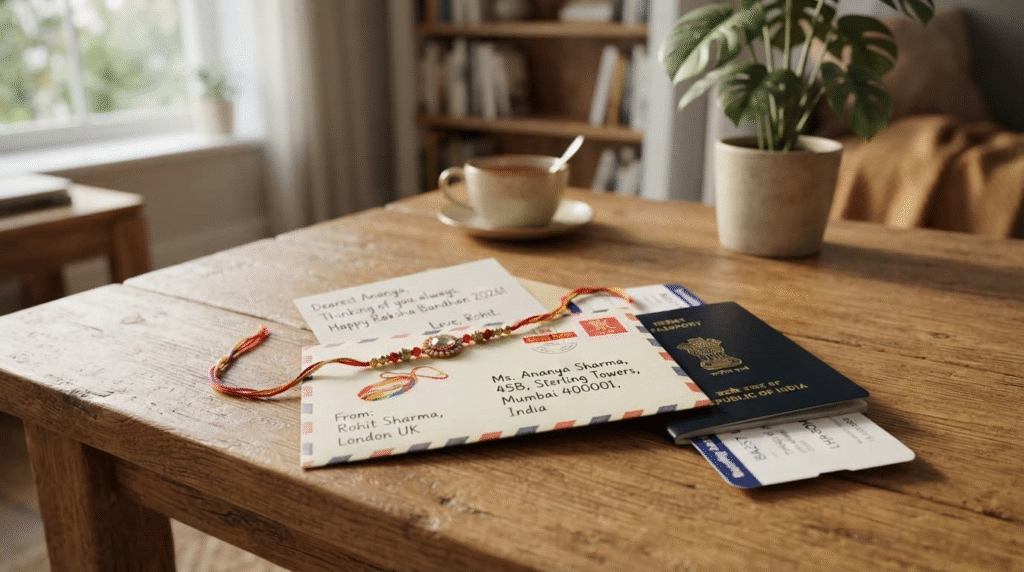
Missing family on Raksha Bandhan is a very specific kind of heavy. Watching everyone else’s photos while sitting in a quiet room halfway across the world hurts. But you can still make it feel real.
- Mail a letter, not just a thread: If you’re mailing a rakhi, write three lines on a scrap of paper and slip it into the envelope. Paper holds onto home—it absorbs the feeling of your desk, your handwriting, your presence.
- Don’t do a rushed call: Skip the 2-minute “Happy Rakhi!” phone call while walking to the subway. Pick an hour when you’re both free. Light a small candle next to your laptop, bring a sweet to the screen, and do the ceremony over video. Tie the thread around a watch, a favorite pen, or a plant on your end while they watch.
- Make gifts personal: If you’re sending money, write a note telling them how to spend it. “Buy that coffee you like,” or “Get those shoes you’ve been talking about.” It keeps it from feeling like a cold transaction.
A Simple Note for the Card
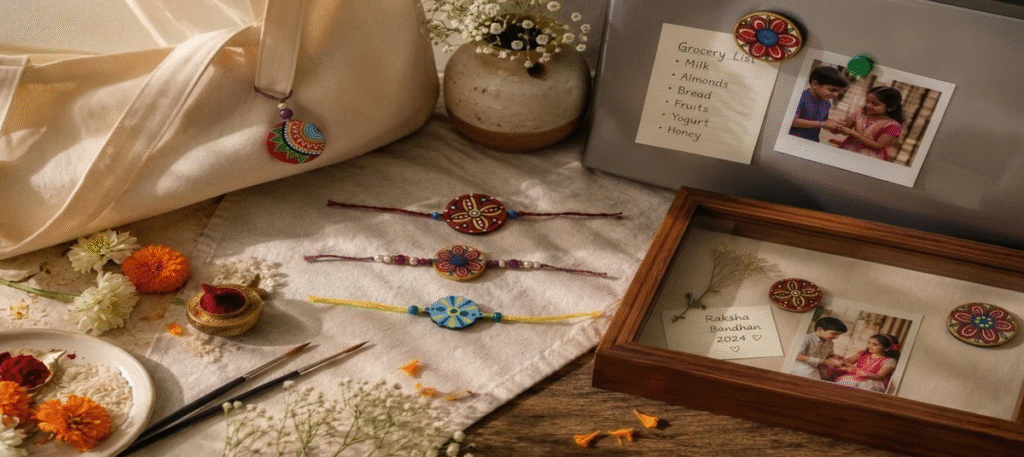
If you’re writing a card, throw away the pre-printed greeting card poems. They sound like they were written by a computer. Just write what’s true:
“Life is busy, and we don’t talk every day. But I’m always so glad you exist, and I’m always in your corner. Thanks for being my person. Happy Rakhi.”
When the day of Raksha Bandhan ends, the kitchen gets cleaned, and everyone goes back to their normal routines, that thread stays on the wrist. It gets faded in the shower, frayed at the edges, and worn down by work—and that’s the best part. It’s a quiet, daily reminder right there on your arm that wherever you go, you belong to someone, and someone belongs to you.