
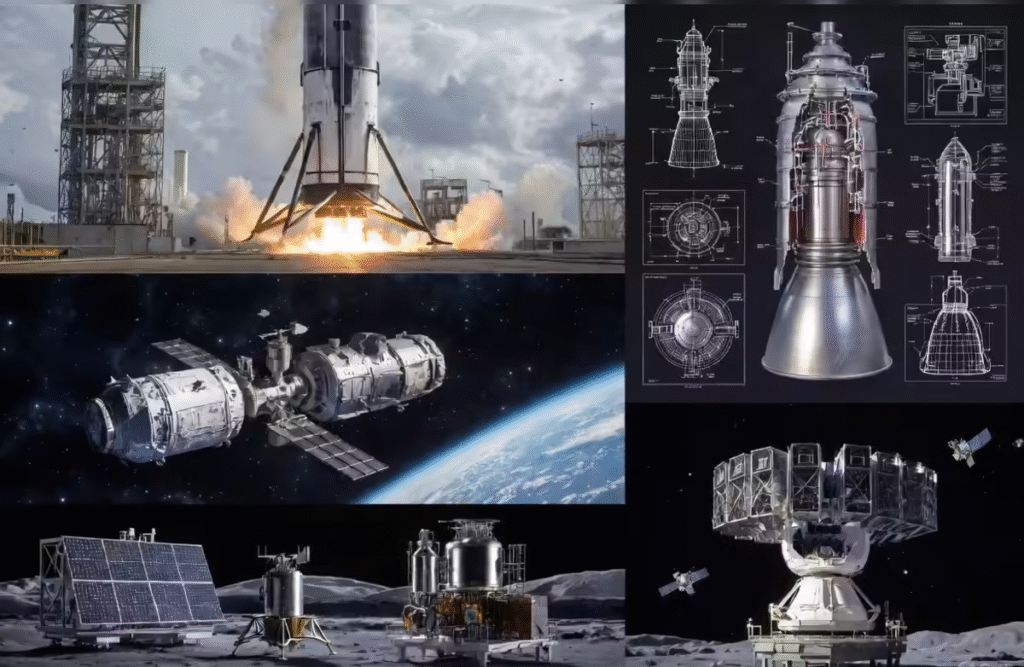
There is a long-standing piece of conventional wisdom that space moves at a snail’s pace in space technology. For decades, that was mostly true. Developing a single satellite meant years of painstaking cleanroom assembly, bespoke hardware design, and terrifying single-point-of-failure launches.
In 2026, that old rulebook has been thoroughly tossed out. The centre of gravity in aerospace has shifted decisively away from custom, isolated spacecraft toward software-defined constellations, edge intelligence, and ground-to-pocket services. Space is no longer an isolated void reached only by specialized research teams; it has become an active, layered extensions of our daily digital networks.
Below is an in-depth mapping of the major satellite technology trends in 2026 that are fundamentally shifting orbital performance, commercial pricing, and international policy—focusing not just on what looks impressive on paper, but what actually scales in practice in space technology.
Direct-to-Device (D2D) Satellite Connectivity Hits the Mass Market
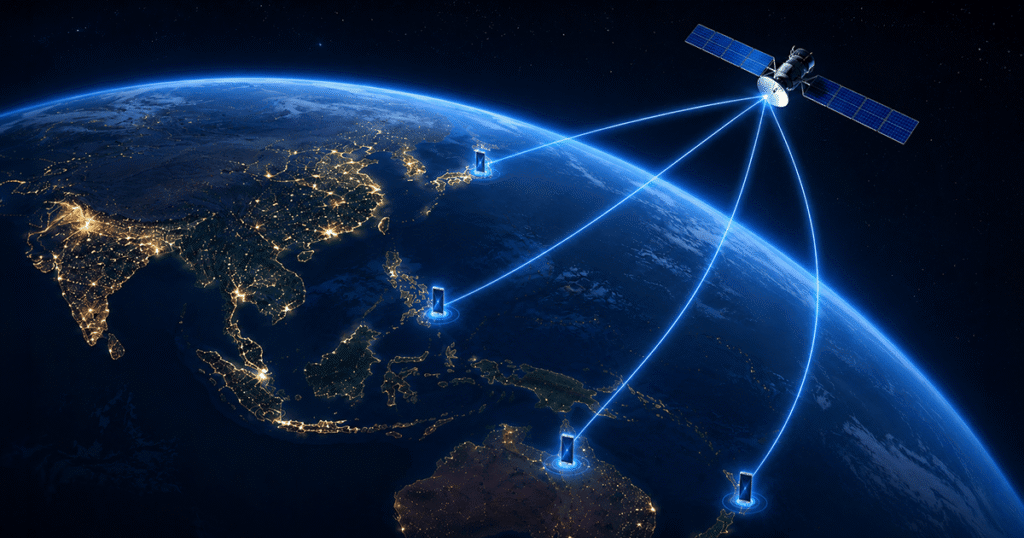
Direct-to-device connectivity has officially crossed the threshold from experimental pilot to everyday consumer product in space technology. We are finally seeing the end of total dead zones. When a hiker steps off the grid or a vehicle drives through a rural mountain pass, handsets now handshake directly with low Earth orbit (LEO) satellites without requiring specialized satellite phones or bulky external dongles.
The real progress here isn’t just raw physics; it’s policy and standards alignment. Regulatory bodies like the International Telecommunication Union (ITU), spectrum authorities, and commercial mobile carriers have aligned around unified frameworks in space technology. By deploying ultra-large phased-array antennas in LEO, operators deliver low-latency links directly to standard consumer chipsets.
- Consumer Impact: Basic messaging everywhere on Earth, emergency SOS resilience during natural disasters, and a gradual rollout of incremental voice and light data app support.
- Operator Impact: Unlocks new roaming agreements, shared billing systems, and complex spectrum-sharing frameworks between terrestrial towers and orbital arrays.
AI-Powered Autonomous Satellite Operations
Managing mega-constellations containing thousands of individual satellites manually is a logistical nightmare. In response, satellites have gained genuine on-board judgment. We are seeing artificial intelligence used in satellite operations stripped of marketing hype—focusing on practical, real-time edge decision-making.
Radiation-hardened neural processing units (NPUs) on modern spacecraft now handle tasks that used to require round-trip ground control communications:
- Autonomous Collision Avoidance: Spacecraft process orbital telemetry locally, calculating debris trajectories and firing thrusters to dodge space junk without waiting hours for ground-crew confirmation.
- Dynamic Beam Steering: On-board algorithms monitor local communications congestion on Earth and automatically reshape beams, reallocate power, and adjust frequency reuse patterns to where demand spikes.
- Anomaly Triage: When a subsystem glitches, on-board diagnostics isolate the issue, execute automated workarounds, and keep the payload alive, maximizing overall network uptime.
By moving these routine operational burdens into orbit, human teams on the ground are liberated to focus on high-level mission policy, overall network health, and commercial strategy.
Low Earth Orbit (LEO) Mega-Constellations Scale Rapidly

Low Earth orbit is no longer a niche frontier for specialized scientific payloads—it is crowded, bustling, and essential in space technology. With over 15,000 active satellites aloft in 2026, the sheer density of LEO constellations underpins modern global connectivity, maritime tracking, and cellular backhaul.
This unprecedented orbital density solves coverage gaps, but it shifts the engineering battleground toward ground segment orchestration and complex supply chain logistics. Launching rockets regularly is only half the battle; routing petabytes of dynamic data through shifting orbital webs without packet loss is where the real technical victories happen.
Short-term industry focus centers on closing remaining geographic coverage holes and diversifying revenue streams beyond standard residential broadband. The immediate next phase relies on intra-constellation routing, enabling sophisticated traffic shaping that guarantees dedicated bandwidth for high-tier enterprise, aviation, and government clients in space technology.
5G Integration with Non-Terrestrial Networks (NTN)
The integration of 5G standards with Non-Terrestrial Networks has transitioned from lab trials to full-scale commercial implementation. Native 5G NTN support, codified through 3GPP standards (Release 17 and 18), fundamentally changes how space and ground networks talk to one another.
Because space protocols now match terrestrial cell standards, handsets and remote IoT sensors treat satellites simply as high-altitude cell towers (or orbital gNodeBs).
- Immediate Value: Instant, resilient backhaul for rural cell sites and automated network redundancy when terrestrial fiber cut events happen during extreme weather.
- Emerging Value: Uninterrupted, high-speed roaming across international commercial aviation, oceanic maritime routes, and global supply chain logistics.
Laser Communications and Optical Inter-Satellite Links (OISL)
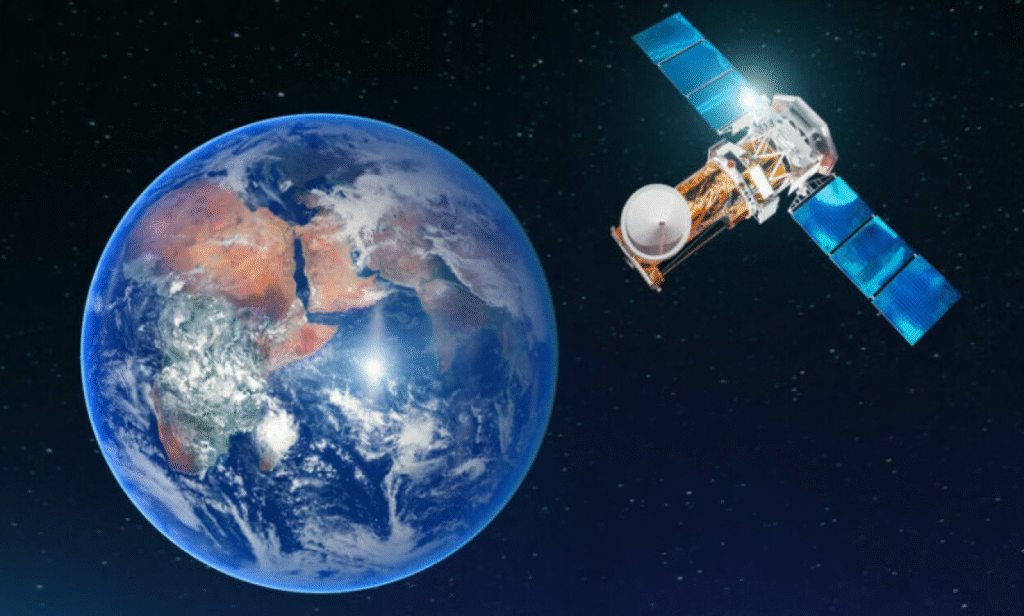
Radio frequency (RF) bands are severely congested, heavily regulated, and prone to atmospheric interference. Optical laser communications have stepped in to provide an high-capacity alternative.
Operating at data rates from 10 Gbps up to 100 Gbps, optical inter-satellite links (OISL) form an optical mesh network in vacuum. Data jumps from satellite to satellite across oceans and continents before ever touching a ground downlink station.
- Key Advantages: Laser beams are exceptionally narrow, making them almost impossible to jam or intercept, while providing vastly higher bandwidth with lower power consumption and smaller terminal footprints.
- Engineering Constraints: Precision pointing is brutally difficult—aiming a narrow optical beam across thousands of kilometers at objects moving at 7.5 km/s requires sub-micro-radian accuracy. Cloud cover also forces operators to maintain hybrid RF links for final ground-downlink segments.
When people talk about reusability in space, they usually mean launch boosters landing on barges. But in 2026, satellite platform reusability itself has arrived. The era of building a $500 million static asset, launching it, and watching it drift into dead space after a decade is coming to an end.
In-Space Servicing, Assembly, and Manufacturing (ISAM) programs are transforming static hardware into adaptable orbital infrastructure. Servicing craft equipped with robotic arms can now dock with aging satellites to top off propulsion fuel, adjust orbits, or install upgraded modular sensor packages. Furthermore, controlled, autonomous de-orbiting capabilities ensure that at the end of a payload’s lifecycle, the asset burns up safely in the atmosphere, keeping operational orbits clear of dangerous junk.
Industrial Satellite-Based IoT Applications
For millions of sensors scattered across the planet, massive bandwidth doesn’t matter—reliable coverage beats bitrate every single time. Satellite-based IoT (NB-IoT NTN) networks have quietly become an unsung hero of industrial automation in 2026.
- Smart Agriculture: Soil moisture sensors, crop telemetry, and automated livestock tracking systems stream lightweight data directly from regions where terrestrial towers will never be economically viable.
- Energy Infrastructure: Pipeline operators monitor pressure gradients, cathodic protection, and valve status across thousands of miles of uninhabited desert or frozen tundra.
- Maritime & Logistics: Cargo containers transmit temperature updates, location coordinates, and security seal status across deep-sea transit routes automatically.
By optimizing for tiny payload packets, hyper-compressed data bursts, and long battery lifespans, these satellite IoT networks deliver low-cost, guaranteed operational visibility.
Space-Based Data Centres and Orbital Computing Platforms
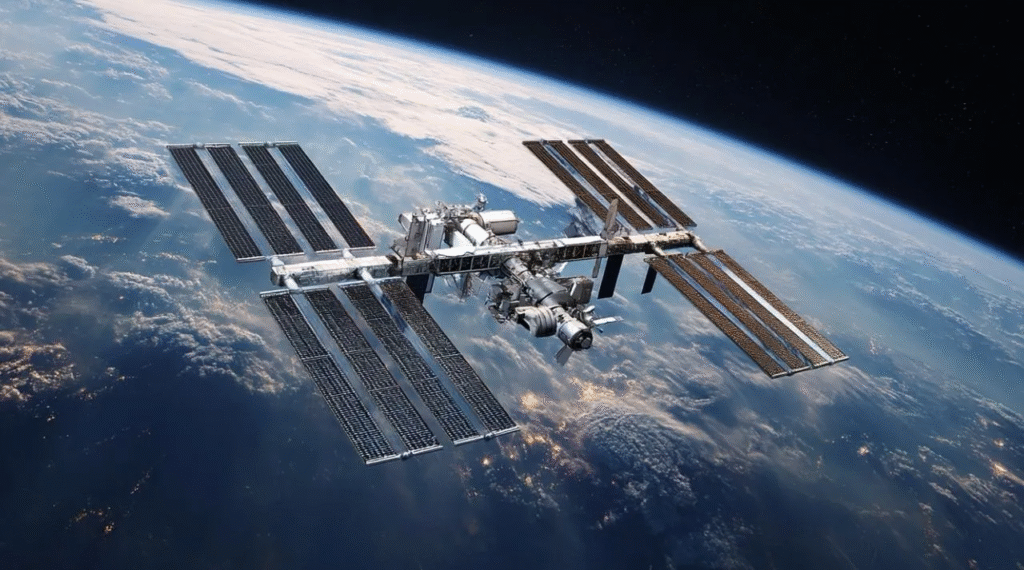
As Earth observation (EO) satellites, synthetic aperture radar (SAR), and multispectral imagers generate vast mountains of raw sensor data, downlinking every single gigabyte to Earth creates a major bottleneck in space technology. The obvious solution? Move the compute up to the data.
Space-based data centers run analytics directly in orbit. Instead of sending gigabytes of raw, high-resolution imagery down to a ground station, onboard AI algorithms process the images near the source—downlinking only the high-value insights, such as detecting a wildfire ignition, identifying a shipping lane block, or spotting an industrial leak.
While passive radiative cooling in vacuum and continuous solar power generation offer fascinating advantages, thermal dissipation without air conduction remains a serious thermal engineering puzzle that hardware designers are actively solving in space technology.
Hybrid Multi-Orbit Network Architectures
No single orbital plane offers a silver bullet solution for every connectivity demand:
- GEO (Geostationary Earth Orbit ~35,786 km): Unmatched wide-area broadcast coverage and massive static throughput, but plagued by unavoidable ~500ms latency delays.
- MEO (Medium Earth Orbit ~2,000–20,000 km): A balanced middle ground offering high throughput for maritime cruise lines and energy platforms with moderate latency.
- LEO (Low Earth Orbit ~300–1,200 km): Ultra-low latency (20–40ms) and high speed, but requiring thousands of satellites to maintain continuous global coverage.
Modern software-defined terminals dynamically load-balance traffic across all three layers simultaneously. Intelligent routers evaluate each data packet in real time, routing lag-sensitive voice calls and financial trades over low-latency LEO paths while steering heavy background bulk downloads over high-capacity GEO or MEO pipelines.
Market Dynamics, Sovereign Capabilities, and Geopolitics
The space industry in 2026 is defined as much by economics and policy as it is by propulsion and optics.
| Domain | Primary Operational Enabler | Industry Impact | Major Challenge |
| Direct-to-Device | 3GPP Rel-17/18, giant phased arrays | Emergency messaging & consumer cellular roaming | Signal attenuation, mobile battery consumption |
| Space AI & Edge | Radiation-tolerant NPUs, edge inference | Autonomous navigation & dynamic beam allocation | Thermal dissipation in vacuum, cosmic radiation |
| Optical Crosslinks | Fine-steering mirrors, narrow-beam lasers | Orbital mesh routing without intermediate ground relay stations | Extreme pointing precision, cloud attenuation |
| Satellite IoT | NB-IoT NTN protocols, low-power ASICs | Remote telemetry in energy, agriculture, & shipping | Orbital pass timing, small packet limits |
Pricing Evolution and Market Consolidation
As major LEO constellations expand, fierce competition is driving terminal costs down and expanding bandwidth availability. Mergers and acquisitions across the industry aim to unite multi-orbit assets under single corporate umbrellas, offering enterprise customers streamlined single-contract service level agreements (SLAs).
Sovereign Space Infrastructure
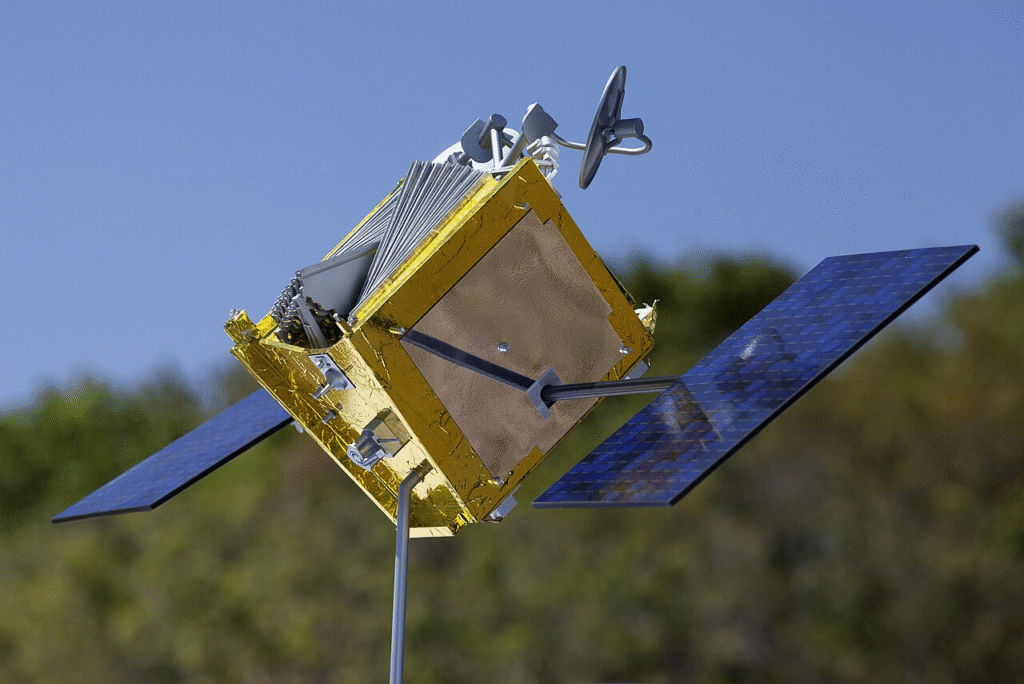
Nations are increasingly treating space technology capabilities as vital national infrastructure rather than optional commercial luxuries. Countries around the world are investing heavily in national earth observation, secure military communications, and sovereign navigation space technology.
constellations to ensure operational independence and keep critical data local during global geopolitical crises.
Future Predictions: Looking Beyond 2026
- Standardized Consumer Handsets Will Default to Orbital Roaming: Within two years, cellular coverage gaps will be viewed as an archaic glitch of the past. Handsets will shift between towers and satellite beams as routinely as they switch between Wi-Fi and 5G today.
- On-Orbit Manufacturing Will Prove Its Commercial Value: Initial commercial manufacturing platforms will begin producing high-purity optical fibers, advanced semiconductors, and biological materials in microgravity that are physically impossible to synthesize inside Earth’s gravity well.
- Debris Mitigation Will Become Strictly Enforced Law: Global regulatory frameworks will tie satellite licensing directly to verified, active de-orbit mechanisms and collision-avoidance capabilities, making space sustainability an imperative cost of doing business.
Space technology in 2026 has officially outgrown its legacy constraints. It is dynamic, highly automated, deeply integrated into our daily mobile devices, and moving faster than ever before.
Frequently Asked Questions
1. Will my current smartphone work with satellite features?
Most recent phones handle emergency satellite texting just fine. But for voice calls and faster internet off the grid, you’ll need a newer phone with built-in 5G orbital support.
2. How does AI actually help a satellite in space?
Instead of waiting hours for ground orders, onboard AI works like an autopilot. It automatically dodges space debris, shifts signal beams to busy areas, and fixes minor glitches instantly.
3. Why switch from radio signals to lasers?
Radio channels are super crowded and laggy. Space lasers beam massive amounts of data directly between satellites at the speed of light, making connections much faster and far harder to intercept.
4. Are mega-constellations making space junk worse?
It’s a big concern, so modern satellites use automated de-orbiting. Once their job is done, they use their last bit of fuel to safely pull themselves into the atmosphere and burn up completely.
5. How do tiny sensors in remote fields connect to space?
use Satellite IoT, sending tiny, low-power data bursts. Instead of streaming heavy files, they briefly push basic updates—like soil moisture or pipe pressure—so battery life lasts for years.