
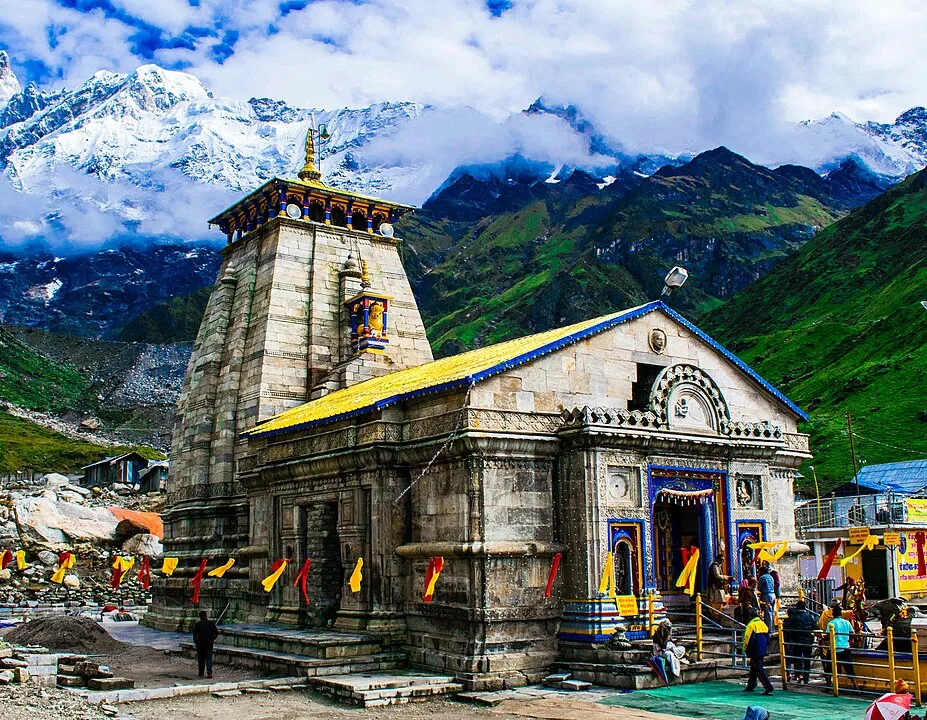
India is a country where religion, culture, and history are intertwined. Temples here are not just places of worship, but a symbol of Indian civilization, art, and faith.
Every state, every city, has a place where devotion and beauty meet.
I have personally visited many temples in India, and each place has its own unique story—one that touches the heart.
Let’s embark on an amazing spiritual journey of India and learn about 15 temples that are not only beautiful but also reflect the soul of India.
1. Kedarnath Temple (Uttarakhand)

Nestled high in the Himalayas , the Kedarnath Temple is one of India’s most sacred sites. Dedicated to Lord Shiva, the temple is considered one of the 12 Jyotirlingas.
The temple is located at an altitude of approximately 3,583 meters above sea level. Reaching it requires a trek of approximately 16 kilometers from Gaurikund. The path is difficult, but devotion keeps you from becoming weary.
The temple was built by the Pandavas and the current structure was renovated by Adi Shankaracharya.
Nestled amidst snow-capped mountains, the Mandakini River, and the surrounding natural beauty, this temple feels like a paradise.
Best time to visit: May to October
Tip: Avoid traveling during the rainy season, as the paths can be slippery.
2. Jagannath Temple (Puri, Odisha)

The Jagannath Temple in Puri is one of the Char Dhams (four holy places) of India. The temple is dedicated to Lord Jagannath, Balabhadra, and Subhadra. Its most famous tradition is the Rath Yatra , held annually in June or July.
The temple’s unique offering, called “Mahaprasad,” is distributed among millions of devotees and never runs out—no matter how many come.
The kitchen is considered the largest religious kitchen in the world.
The temple’s architecture dates back to the Gajapati kings, and its 214-foot-high spire is visible from afar, even from the city of Puri.
Best time to visit: November to February
Tip: The atmosphere is most vibrant during the Rath Yatra.
3. Kashi Vishwanath Temple (Varanasi, Uttar Pradesh)

Located in Varanasi, India’s oldest city, the Kashi Vishwanath Temple is a famous Jyotirlinga dedicated to Lord Shiva. It is said that visiting the temple bestows salvation.
The temple is located on the banks of the Ganges River. The evening Ganga Aarti and the sound of the temple bells combine to create a divine experience. The
recently completed Kashi Corridor has further enhanced the area surrounding the temple.
Visitors should definitely wander the streets of Kashi, take a boat ride on the Ganges River, and sample the local Banarasi paan.
Best time to visit: October to March.
Highlights: This temple is not just a religious site, but a center of faith in India.
4. Vaishno Devi Temple (Katra, Jammu and Kashmir)

The Vaishno Devi Temple is located in the Trikuta Hills of Jammu. Devotees must trek 13 kilometers, but the fatigue vanishes with every chant of “Jai Mata Di.”
The cave houses three idols of Goddess Vaishno Devi – Mahakali, Mahalakshmi, and Mahasaraswati.
The atmosphere here is so devotional that it leaves everyone emotional.
Helicopter services are now available, making travel easier.
Best time: March to October.
Tip: It snows here in winter, so pack warm clothes.
5. Meenakshi Temple (Madurai, Tamil Nadu)

The Meenakshi Amman Temple, a gem of South India, is dedicated to Lord Shiva and Goddess Parvati. The temple is named after the goddess Meenakshi.
The temple is composed of 14 massive gopurams (gateways), each adorned with intricately colored sculptures and carvings. Each gopuram tells a different story.
The city of Madurai is identified by this temple.
The Meenakshi Tirukalyanam festival is celebrated here every year in April-May , commemorating the marriage of Goddess Meenakshi and Lord Sundareswarar (Shiva).
Best time: November to March
Highlights: This temple is a masterpiece of Indian architecture.
6. Somnath Temple (Gujarat)

Located in the Saurashtra region of Gujarat , the Somnath Temple is considered the first of the 12 Jyotirlingas of Lord Shiva.
Standing on the seashore, the temple offers a stunning view of the sunset and the sound of the waves in the background.
According to history, this temple was looted and destroyed several times, but was rebuilt each time. This is a true example of eternal faith.
Best time: October to March.
Tip: Being at the temple during the evening aarti is a divine experience.
7. Golden Temple (Amritsar, Punjab)

The Harmandir Sahib , commonly known as the Golden Temple , is the holiest site in Sikhism. It derives its name from its golden dome, which shimmers beautifully in the waters of the lake.
The temple is open to people of all faiths, not just Sikhs.
The langar is the world’s largest free community kitchen, serving millions of meals daily.
When the temple is illuminated at night, the view is truly captivating.
Best time to visit: November to March
Highlights: The spirit of service here reflects the soul of Sikhism.
8. Badrinath Temple (Uttarakhand)

The Badrinath Temple is dedicated to Lord Vishnu and is one of the Char Dhams.
Located on the banks of the Alaknanda River, amidst snow-capped peaks.
It is said that Lord Vishnu came here to perform penance. In front of the temple is a hot spring called Tapt Kund, where devotees bathe before entering the temple.
Best time: May to October.
Tip: The temple is closed during the winter, so choose your visit time carefully.
9. Akshardham Temple (Delhi)

The Akshardham Temple in Delhi is a modern-day architectural marvel.
Dedicated to Lord Swaminarayan, it is built from pink stone and white marble.
The carvings inside the temple are so intricate that each statue seems to speak.
The evening water show and cultural exhibition are worth seeing.
Best time: October to February
Highlights: Here you can witness the fusion of Indian culture, spirituality, and art.
10. Tirupati Balaji Temple (Andhra Pradesh)

The Sri Venkateswara Swamy Temple , located in Tirumala, is considered the richest temple in India.
Millions of devotees visit the temple daily.
The temple’s administration is highly disciplined, and every facility is available for devotees.
The “Laddu Prasadam” here is famous throughout India.
Best time: September to March.
Highlights: The natural beauty of the hills and the grandeur of the temple combine to create a truly remarkable experience.
11. Rameswaram Temple (Tamil Nadu)

The Ramanathaswamy Temple , also known as the Rameswaram Temple
, is dedicated to Lord Shiva. This temple dates back to the Ramayana period—it is said that Lord Rama built the bridge to reach Lanka from here.
The temple has a corridor with 1000 pillars, whose length and carvings will leave you awestruck.
Best time: October to April
Tip: Sitting on the beach at sunrise is very relaxing.
12. Konark Sun Temple (Odisha)

This temple is dedicated to the Sun God and was built in the 13th century by King Narasimhadeva of the Ganga Dynasty.
The entire temple is built in the shape of a chariot with 12 pairs of stone wheels and seven horses.
It is a UNESCO World Heritage Site and a magnificent example of Indian architecture.
Best time: October to February
Highlights: The Konark Dance Festival is held here every year.
13. Amarnath Cave Temple (Jammu and Kashmir)

This temple is dedicated to Lord Shiva and is notable for its unique ice lingam.
Every year, millions of devotees travel the arduous route to reach the temple.
This journey is a test of both faith and courage.
Best time: July to August
Tip: Due to the altitude and weather, a health check-up is required before the trip.
14. Khajuraho Group of Temples (Madhya Pradesh)

The temples of Khajuraho are epitomes of Indian art and architecture.
The sculptures here depict every aspect of human life—love, dance, music, and devotion.
These temples were built by the Chandela dynasty in the 10th century.
Best time: October to March
Highlights: It is a UNESCO World Heritage Site and attracts a large number of foreign tourists.
15. Shirdi Sai Baba Temple (Maharashtra)

Shirdi Sai Baba Temple is located in the Ahmednagar district of Maharashtra.
This temple symbolizes the life of Sai Baba and his teachings – “One Master for All. ”
Thousands of devotees visit the temple daily, and the atmosphere becomes extremely devotional during the Aarti.
Best time: October to February
Highlights: The offerings and peaceful atmosphere here soothe the mind.
| Number | Tips | Description |
|---|---|---|
| 1 | Choose the right season | Be sure to check temple opening hours and weather conditions before traveling. Avoid hill temples during rainy or snowy weather. |
| 2 | Book in advance | Book online darshan slots or hotels in advance at popular temples (like Tirupati, Vaishno Devi). |
| 3 | Respect the local culture | Follow the dress code and discipline within the temple premises. Seek permission before taking photographs. |
| 4 | Keep things light | For long trekking trips (like Kedarnath, Amarnath), carry only essential items. |
| 5 | be in good shape | Get a health check-up done before travelling to high altitude areas and carry necessary medicines with you. |
These 15 temples in India are not just places of worship, but living testaments to Indian culture, art, and spirituality. Each temple has its own story—sometimes filled with devotion, some with history, and some with architectural beauty. If you’re a travel enthusiast, a trip to these temples is a must. You’ll find it’s not just a trip, but a soul-stirring experience.
This blog is for general information and travel guidance purposes only. Changes to temple timings, entry rules, or darshan procedures are possible, so be sure to check the relevant temple’s official website or local sources for the latest information before traveling. The experiences shared in this article are based on personal perspectives.
#IndianTemples #TravelIndia #SpiritualJourney #BeautifulTemples #Carrerbook #Anslation #HinduPilgrimage #ExploreIndia #Kedarnath #MeenakshiTemple #GoldenTemple #TravelBlogIndia #IncredibleIndia #TempleTour #IndianCulture #HeritageTravel #IndiaTourism